
Local GuidesMold Testing
How to choose a mold inspector in Northeast Meridian
Choosing a mold inspector in Northeast Meridian comes down to three things: independent testing, lab-backed results, and someone who knows this area's crawl spaces.
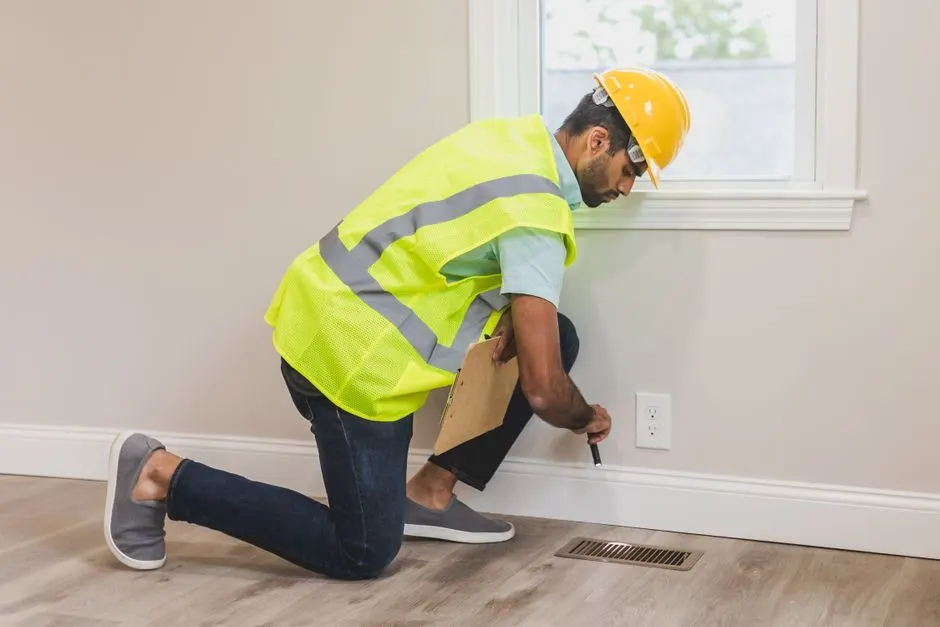
Choosing a mold inspector in Northeast Meridian comes down to three things: they test rather than guess, they send samples to an accredited lab, and they know how this specific part of the Treasure Valley builds and breathes. Anyone who skips those three is selling you a service call, not an answer.
Northeast Meridian is not the same as a coastal city or a humid southern suburb. Our problem is not year-round damp air. It is snowmelt against foundations in March, irrigation overspray in July, and tight modern construction that traps moisture in crawl spaces and wall cavities. A mold inspector who does not understand that pattern will miss the source and test the wrong room.
Below, we walk through what to look for, what to ask, what 2026 pricing looks like here, and the mistakes we see homeowners make over and over.
What separates a good mold inspector from a bad one in Northeast Meridian
A good mold inspector in Northeast Meridian documents moisture, not just visible growth. Anyone can look at a black patch under a bathroom sink and say "that's mold." The useful question is where the water is coming from, how far it has spread, and whether the air in the rest of the house is affected.
Here is what we look for when we evaluate our own industry:
- They test, they do not just eyeball. A visual walkthrough is a starting point. Lab results from air and surface samples are the evidence.
- They use moisture meters and thermal imaging. Mold behind drywall does not show up in a photo. Infrared and pin-type meters find it.
- They send samples to an accredited third-party lab. Not an in-house kit, not a petri dish on the counter.
- They do not also sell remediation. More on this below, but it is the single biggest conflict of interest in this trade.
- They write a report you can actually use. Species, spore counts, affected areas, and recommended next steps.
If a company cannot tell you which lab they use, that is your answer. Walk away.
How do I choose a mold inspector in Northeast Meridian ID?
You choose a mold inspector in Northeast Meridian ID by verifying four things before you book: credentials, lab partnership, independence from remediation, and local experience with the housing stock here. Everything else is marketing.
Start with credentials. In Idaho, mold inspection is not a licensed trade the way electrical or plumbing work is, which means anyone with a flashlight and a business card can claim the title. That makes certifications matter more, not less. Look for credentials from recognized industry bodies and ask what specific training the person arriving at your door has completed.
Next, ask which laboratory processes the samples. A legitimate inspector will name the lab without hesitation. The lab should be accredited, and the report should come directly from them, not retyped by the inspector.
Then ask the independence question. If the same company inspects your home and then quotes you $8,000 to remediate it, you have a problem. The inspector has a financial incentive to find mold, and to find a lot of it. We do not do remediation. That is not a moral high ground, it is just how the math should work.
Finally, ask about local experience. A company that mostly works in Boise's North End will not necessarily understand why a 2019 build in Northeast Meridian has moisture in the crawl space. Different construction, different drainage, different problem. If you want to see how we handle that locally, look at our Mold Testing in Northeast Meridian page.
The independence question nobody asks
This is the one that costs homeowners the most money, and almost nobody asks it upfront.
When a remediation company performs its own inspection, the inspection is not really an inspection. It is a sales call with a moisture meter. We have seen quotes for full-home remediation based on a single surface swab and no air sampling at all. We have also seen the opposite: a homeowner told they had "toxic black mold" everywhere, paid for a full tear-out, and never received a lab report naming a species.
An independent inspector has no financial reason to inflate the findings. If the lab comes back clean, we tell you it is clean. If it comes back with elevated Cladosporium spores in one bedroom, we tell you that too, and we tell you it is common and usually not a health emergency.
Ask directly: "Do you also perform remediation?" If the answer is yes, get a second opinion from someone who does not. If you want a baseline on what proper testing looks like, our Mold Inspection Meridian ID service page walks through the process step by step.
What a real inspection looks like in a Northeast Meridian home
A real inspection in a Northeast Meridian home takes 90 minutes to three hours, depending on square footage and how many problem areas you have flagged. Anything under an hour is a walkthrough, not an inspection.
Here is the sequence we follow, and what you should expect from any inspector you hire:
- Interview and history. When did you first notice the smell or the stain? Any recent water events, roof leaks, or HVAC changes?
- Exterior walk. Grading, downspout discharge, irrigation placement, foundation cracks. In Northeast Meridian, irrigation heads aimed at the foundation are a recurring culprit.
- Moisture mapping. Pin meters and thermal imaging across suspect walls, floors, and ceilings. This is where hidden moisture shows up.
- Air sampling. At minimum, one outdoor control sample and one or more indoor samples, depending on layout.
- Surface sampling. Tape lifts or swabs on visible growth to identify species.
- Crawl space and attic check. These are the two areas most Northeast Meridian homeowners never look at, and where mold quietly establishes itself.
- Lab submission and report. Results typically come back in two to five business days.
If your home has had a recent water event, the scope changes. Water damage mold testing after a burst pipe or appliance failure needs to happen within 24 to 48 hours of the moisture being addressed, because mold can begin colonizing porous materials in that window.
Why crawl spaces matter more here than most places
Most homes in this part of Meridian have vented crawl spaces. In winter, warm moist air from the house rises into the crawl space and condenses on the cold joists. In spring, snowmelt saturates the soil and pushes vapor up through the vapor barrier if it is torn or missing. Both patterns feed mold growth on wood framing that nobody sees until a floor starts feeling soft.
If your inspector does not plan to enter the crawl space, that is a red flag. Ask before you book. If they will not go in, hire someone who will. Our Crawl Space Mold Testing Meridian ID page covers what we check and why.
What mold testing costs in Northeast Meridian in 2026
Typical 2026 pricing for mold testing in Northeast Meridian runs $350 to $650 for a standard single-family home with two to four samples, and $700 to $1,200 for larger homes, multi-unit properties, or inspections that include crawl space and attic sampling.
Here is how the pricing usually breaks down:
- Base inspection fee: $150 to $300, covering the walkthrough, moisture mapping, and thermal scan.
- Air samples: $75 to $125 each. Most homes need two to four.
- Surface samples: $60 to $100 each.
- Crawl space or attic add-on: $100 to $250, depending on access and size.
- Rush lab processing: $50 to $150 if you need results in 24 hours.
If a quote comes in dramatically under $300 for a full home with air sampling, ask what is actually included. Usually it is a visual walkthrough with no lab work, which tells you almost nothing.
If a quote comes in over $1,500 for a standard 2,000-square-foot home with no unusual complications, ask why. Sometimes there is a legitimate reason. Often there is not.
Common mistakes homeowners make when hiring
The mistakes are consistent enough that we can list them from memory.
- Hiring the remediation company to inspect. Covered above, but it is the number one issue.
- Accepting a verbal report. If you do not get a written report with lab data, you have nothing to show a buyer, a landlord, or an insurance adjuster.
- Skipping air sampling because visible mold was found. Visible mold tells you there is growth. Air sampling tells you whether the rest of the house is affected.
- Testing before fixing the moisture source. Mold testing on an active leak is a snapshot of a moving target. Fix the water first, then test.
- Not asking about the lab. In-house kits and DIY petri dishes produce results that no remediation contractor or real estate transaction will accept.
- Ignoring the crawl space. We have seen homes with spotless interiors and heavy growth on the floor joists below.
- Choosing on price alone. The cheapest inspection is usually the one that finds nothing, which is not the same as a clean home.
One more: homeowners often wait until they smell something obvious. Mold does not always smell. A musty odor is a signal, but the absence of one is not proof of anything.
When to call a professional
Call a professional when you have visible growth larger than about 10 square feet, when you smell mustiness you cannot trace, when anyone in the home has unexplained respiratory symptoms that improve when they leave, or when you are buying or selling a home and need documentation.
You can handle a small patch of surface mold on a bathroom tile with household cleaner and better ventilation. You cannot handle mold inside a wall cavity, under flooring, or in a crawl space without testing to find out how far it has spread.
We handle this every week across Meridian. Our team tests, documents, and hands you a lab report you can act on. We do not remediate, so the findings are what they are. If you want to see the full range of what we do, start at our Mold Testing Meridian ID page.
Frequently Asked Questions
How do I choose a mold inspector in Northeast Meridian ID?
Verify four things: industry certifications, an accredited third-party lab, independence from remediation work, and experience with Northeast Meridian's crawl space and irrigation moisture patterns. Ask each question directly before booking. A qualified inspector answers all four without hesitation.
What should I look for in a mold inspector in Northeast Meridian?
Look for moisture meters, thermal imaging, air and surface sampling, and a written lab report with species and spore counts. Expect 90 minutes to three hours on site. Avoid anyone who only does a visual walkthrough or who also sells remediation services.
Who is the best mold inspector in Northeast Meridian Idaho?
The best inspector is the one who tests independently, uses an accredited lab, and does not profit from remediation. Ask for a sample report, confirm the lab, and check whether they enter crawl spaces. Those three checks separate qualified inspectors from sales calls.
How long does a mold inspection take?
A standard single-family home takes 90 minutes to three hours on site. Lab results come back in two to five business days, or 24 hours with rush processing. Larger homes and properties with crawl space or attic sampling run longer.
How much does mold testing cost in Northeast Meridian?
Typical 2026 pricing is $350 to $650 for a standard home with two to four samples, and $700 to $1,200 for larger homes or inspections including crawl space and attic sampling. Air samples run $75 to $125 each.
Get help with Mold Testing in Meridian
If you are ready to stop guessing and get a real answer about your home, we can help. We test, we document, and we hand you a lab report you can use.
Call Meridian Mold Testing at (208) 823 1178 to schedule your inspection.